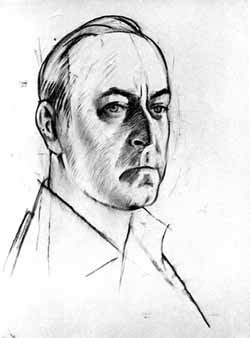
The Annual International Scientific Conference "Platonic Readings" bears the name of the outstanding scholar, art critic, and professor of the National Academy of Fine Arts and Architecture (NAFAA) Platon Oleksandrovych Biletsky (1922–1998). The conference has been bringing together like-minded researchers within the walls of NAFAA since 2014. The breadth of Platon Oleksandrovych's academic interests has allowed the conference to cover a wide range of topics: Ukrainian art from antiquity to the present day, art of the East and West, teaching methodology of specialized disciplines, and issues of art education.
The idea of holding an art studies conference at NAFAA belonged to art critic and professor of the Department of Art History and Theory Liudmyla Semenivna Miliaieva. It was she who proposed in 2014 to gather annually among like-minded colleagues to discuss questions of art history and theory. Until 2021, the conference was led by Liudmyla Oleksandrivna Lysenko, a scholar and lecturer.
The "Platonic Readings" conference is currently held in an online format. Conference materials are published as an electronic collection and posted on the website of the Liha-Pres publishing house at http://catalog.liha-pres.eu/index.php/liha-pres/catalog/category/Culture and on the conference website at https://platonconference.kiev.ua/uk/tezy-dopovidei
On November 29, the Thirteenth International Scientific Conference "Platonic Readings" took place.
We publish the opening remarks of Volodymyr Petrashyk, Candidate of Art Studies, Associate Professor, and Head of the Department of Theory and History of Art at NAFAA.
"Platonic Readings – XIII": A Dialogue of Tradition and Modernity in the Space of Art Studies Thought
The XIII International Scientific Conference "Platonic Readings" is a significant event in the academic life of the Ukrainian art studies community, bringing together researchers in art theory and history, cultural studies, philosophy, related humanities, as well as practicing artists and young scholars. This year's gathering was dedicated to the cherished memory of the outstanding Ukrainian art scholar and professor Oleksandr Kasianovych Fedoruk — a scholar whose work became defining for the development of Ukrainian art studies thought in the second half of the twentieth and early twenty-first centuries.
The scholarly legacy of O. K. Fedoruk is distinguished by the depth of its analytical thinking, methodological balance, and broad cultural context. His works contributed to an understanding of key processes in Ukrainian art, the affirmation of national identity in artistic culture, and the integration of Ukrainian art scholarship into global academic discourse. Also significant is his contribution to the formation of academic schools and the training of new generations of researchers.
The materials presented in the conference proceedings reflect current directions in contemporary art studies research, demonstrating an interdisciplinary approach and a breadth of subject matter — from historical and artistic studies to theoretical and methodological inquiry. The conference participants, continuing the intellectual tradition established by their predecessors — including P. O. Biletsky, O. K. Fedoruk, and many other researchers — bring renewed relevance to questions of the role of art in today's cultural space, its functions and transformations in the modern world.
The proceedings of the XIII "Platonic Readings" are intended not only to record the scholarly outcomes of the conference, but also to serve as a platform for the further development of professional dialogue, and the preservation and enrichment of the intellectual heritage of Ukrainian art scholarship. Honoring the memory of Professor Oleksandr Kasianovych Fedoruk in this context is a testament to the continuity of scholarly tradition and deep respect for the figures who define the face of national humanistic science.
The plenary session of the Conference was attended by students of Oleksandr Kasianovych Fedoruk and his sons, Yaroslav Oleksandrovych Fedoruk and Oles Oleksandrovych Fedoruk. We publish a transcript of a fragment of the session.